

Stonehenge Winter Solstice Sunrise Draws Thousands to Ancient Monument
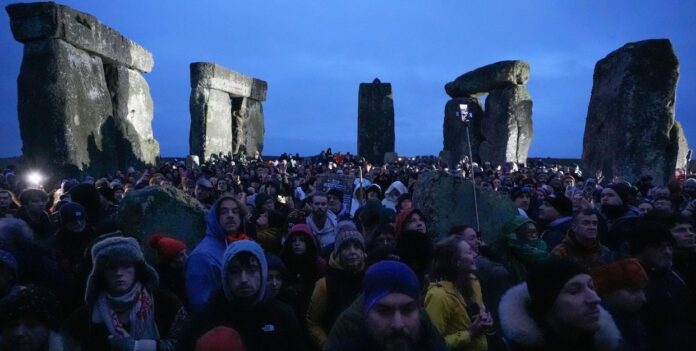
Stonehenge winter solstice sunrise once again transformed the ancient stone circle into a gathering place of awe, reflection, and tradition as thousands of visitors arrived before dawn to witness one of nature’s most symbolic moments.
On the shortest day of the year, the Sun rose just after 08:00 GMT over the prehistoric site in Wiltshire, England. For many, the experience was not simply about watching the sunrise, but about participating in a centuries-old ritual that marks renewal, balance, and the gradual return of light.
Stonehenge Winter Solstice Sunrise Marks the Shortest Day
The Stonehenge winter solstice sunrise occurs each year around December 21, when daylight reaches its lowest point in the Northern Hemisphere. From this day forward, daylight slowly begins to increase, making the event a powerful symbol of hope and continuity.
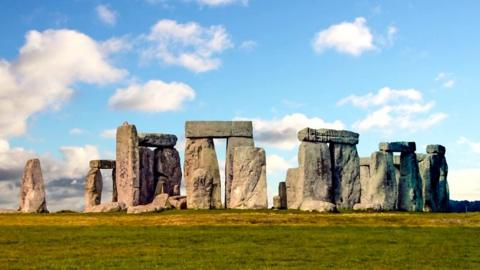
Stonehenge’s alignment with the Sun has fascinated archaeologists and historians for generations. The monument is carefully positioned so that the Sun rises and sets in alignment with specific stones during both the winter and summer solstices, reinforcing the idea that the site served as a ceremonial or spiritual calendar for ancient people.
For more on Stonehenge’s astronomical significance, visit English Heritage (DoFollow).
Thousands Gather for Stonehenge Winter Solstice Sunrise
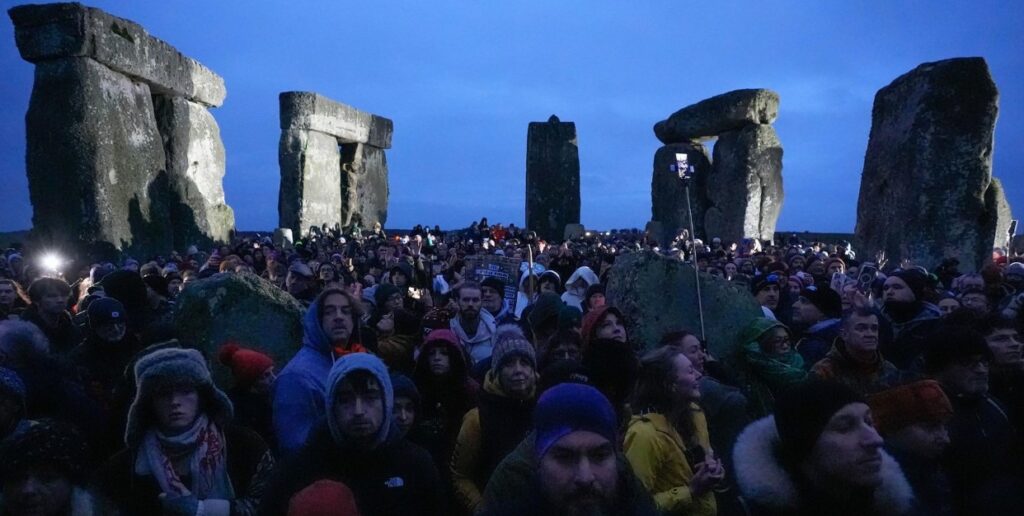
This year, an estimated 8,500 visitors attended the Stonehenge winter solstice sunrise, braving early morning cold and long travel hours. Families, spiritual groups, tourists, and modern Druids all gathered peacefully to welcome the Sun.
Some visitors traveled from across the country. One family told the BBC they woke up at 02:00 to drive from Nottingham, emphasizing how meaningful the event has become for people of all ages.
Unlike many tourist experiences, the winter solstice at Stonehenge encourages quiet participation and respect for tradition rather than spectacle.
Why the Stonehenge Winter Solstice Sunrise Matters
The Stonehenge winter solstice sunrise is believed by experts to have been more important to the monument’s original builders than the summer solstice. Archaeological evidence suggests ancient communities gathered at Stonehenge in winter, possibly for feasting, ceremonies, and communal reflection.
Winter was a time of survival and hardship for prehistoric societies. Celebrating the return of longer days may have offered reassurance that life would continue.
Today, that same symbolism resonates with modern visitors who view the solstice as a reminder of resilience and renewal.
Rituals and Traditions at Stonehenge
During the Stonehenge winter solstice sunrise, some attendees wear ceremonial clothing, while others participate in quiet meditation or symbolic rituals. These practices vary widely, but all share a common theme of respect for the site’s ancient purpose.
“It’s just nice to get involved,” said Bella Ridley-Thompson, who attended with her family. “This is a ceremony after all, so it’s nice to dress up and have a bit of respect.”
While not everyone participates in rituals, most visitors agree the atmosphere feels markedly different from an ordinary day at the monument.
A Timelapse Captures the Stonehenge Winter Solstice Sunrise
This year’s Stonehenge winter solstice sunrise was beautifully captured through timelapse photography, showing the slow emergence of light over the standing stones. The footage highlights how the Sun aligns precisely with the monument, reinforcing theories about its astronomical design.
Timelapse videos allow viewers who cannot attend in person to experience the moment virtually. Many clips have been shared online, attracting millions of views and renewing global interest in the ancient site.
For science-based insights into solstices, visit NASA’s Earth Observatory (DoFollow).
From Darkness to Light: What Happens After the Solstice
Following the Stonehenge winter solstice sunrise, days begin to lengthen gradually. While the change is subtle at first, it marks a turning point in the seasonal cycle.
This transition has been celebrated by cultures around the world for thousands of years. From ancient Europe to Asia and the Americas, solstice festivals symbolized survival, rebirth, and the promise of spring.
Stonehenge remains one of the most iconic locations to observe this transition, bridging ancient knowledge with modern appreciation.
Preserving Stonehenge for Future Generations
Managing crowds during the Stonehenge winter solstice sunrise requires careful planning. English Heritage allows managed access to protect the stones while ensuring visitors can experience the event respectfully.
Preservation experts stress that responsible tourism is essential to safeguarding the monument for future generations. Visitors are encouraged to follow guidelines, avoid touching fragile stones, and respect the spiritual significance the site holds for many.
Learn more about preservation efforts at UNESCO World Heritage (DoFollow).
Stonehenge Winter Solstice Sunrise in Modern Culture
The Stonehenge winter solstice sunrise has become a cultural moment shared across social media, documentaries, and news coverage. While the ritual remains ancient, the way people experience it continues to evolve.
From drone footage to livestreams, technology now allows the solstice to be witnessed globally, connecting people to traditions rooted thousands of years in the past.
Final Thoughts
The Stonehenge winter solstice sunrise is more than a natural event, it’s a moment where history, astronomy, and human connection intersect. As the Sun rises over the ancient stones, it reminds visitors that even in the darkest times, light always returns.

