

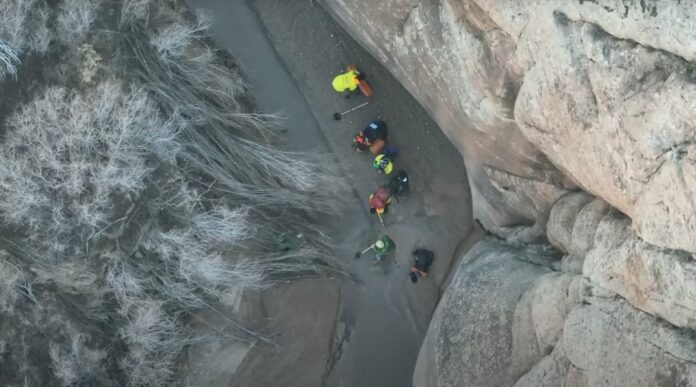
The quicksand rescue moment involving Utah hiker Austin Dirks has quickly become one of the most talked-about outdoor survival events of the year. What began as a routine hike through the upper regions of Arches National Park turned into a terrifying ordeal when Dirks found himself trapped, literally, in sinking terrain. His chilling experience and dramatic rescue are now raising awareness about hidden natural dangers, the importance of preparation and emergency gear, and how quickly a peaceful hike can become life-threatening.
In this detailed breakdown, we explore exactly what happened, how rescuers located him, and why the quicksand rescue moment has struck such a powerful chord with outdoor enthusiasts everywhere.
Quicksand Rescue Moment Begins With a Sudden Emergency
The quicksand rescue moment unfolded when hiker Austin Dirks was navigating the rugged landscape of Arches National Park in Utah, a region famous for breathtaking sandstone arches, towering pinnacles, and hidden desert hazards.
According to reports shared by CBS News, Dirks was trekking through an upper area of the park when his left leg suddenly plunged deep into the ground. What looked like normal wet soil was actually a concealed patch of quicksand, a natural phenomenon more common in desert canyons than most hikers realize.
Dirks described the moment as “instant panic,” as the ground swallowed his leg and tightly locked it in place.
Temperatures Drop as the Quicksand Rescue Moment Intensifies
As the minutes passed, the situation worsened. Not only was Dirks stuck, but temperatures had fallen to around 20 degrees Fahrenheit (-7°C). The combination of cold, isolation, and immobility turned the situation into a dangerous survival scenario.
Dirks later revealed that he began to experience:
-
Numbness
-
Loss of circulation
-
Difficulty stabilizing himself
-
Fear of hypothermia
This heightened the urgency of the quicksand rescue moment, making it clear he needed help immediately.
Technology Plays a Lifesaving Role in the Quicksand Rescue Moment
Realizing he could not pull himself free, Dirks relied on one device that ultimately saved his life: a GPS satellite messenger.
Because Arches National Park often has no cell service, the satellite device became his best, and only, line of communication. He sent an emergency alert, transmitting his precise coordinates to rescuers.
Experts from organizations such as the National Park Service emphasize that devices like this drastically increase survival odds in remote areas. (See more on satellite devices: https://www.nps.gov).
This single piece of gear turned a hopeless situation into a possible rescue.
Search Teams Zero In on the Quicksand Rescue Moment
After receiving the distress signal, a coordinated team launched into action. Rescuers deployed:
-
A rescue drone to locate Dirks
-
Ground crews trained to navigate hazardous terrain
-
Cold weather rescue specialists
For nearly two hours, Dirks waited, frozen, trapped, and unsure whether help would arrive in time.
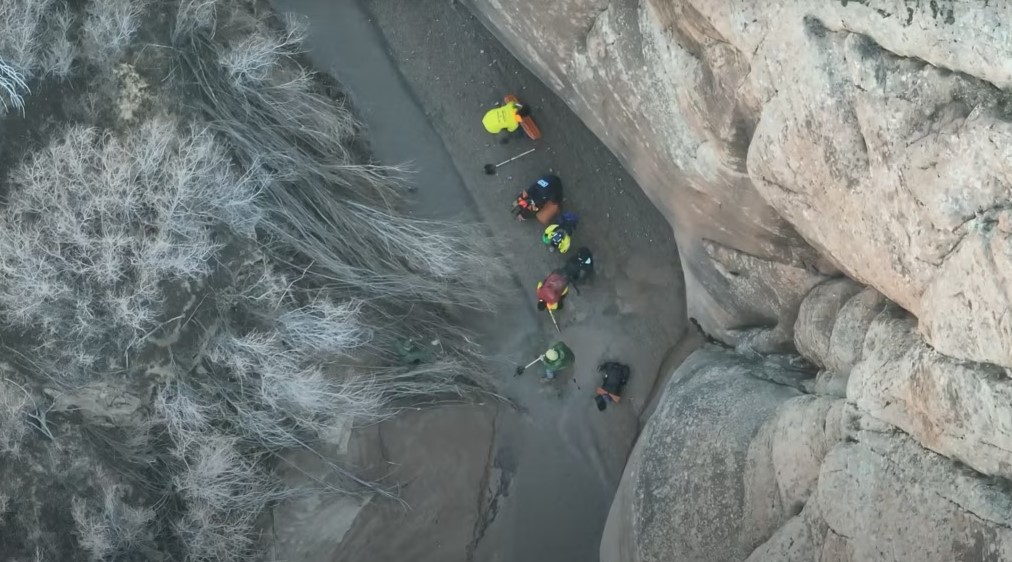
Then, in what he described as the most emotional moment of his life, he heard a faint buzzing overhead. A rescue drone had found him, marking the turning point in the quicksand rescue moment.
The Dramatic Extraction During the Quicksand Rescue Moment
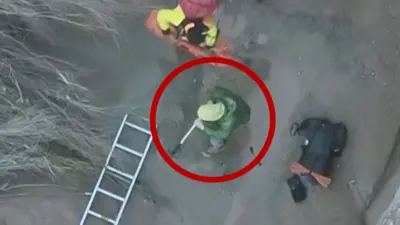
Once teams reached Dirks, they carefully began the extraction process. Contrary to Hollywood portrayals, quicksand does not “suck a person down.” Instead, it traps limbs in dense, water-loosened sand, creating a cement-like hold.
Rescuers spent time:
-
Digging around his leg
-
Loosening the packed quicksand
-
Using ropes and leverage
-
Ensuring he wasn’t further injured
Eventually, after a long and meticulous effort, they freed him.
Dirks was cold, exhausted, and shaken, but alive.
Why the Quicksand Rescue Moment Is a Wake-Up Call for Hikers
This incident isn’t just a dramatic story; it’s a learning moment for outdoor lovers everywhere. The quicksand rescue moment highlights several critical lessons:
1. Hidden Natural Hazards Are More Common Than You Think
Quicksand forms in riverbeds, canyon floors, and wet desert sand, common hiking zones in Utah.
2. Emergency Gear Isn’t Optional
GPS satellite messengers can be purchased for $100–$300 and require minimal setup.
3. Weather Conditions Can Turn a Mild Situation Deadly Fast
Exposure to freezing temperatures significantly increases risk.
4. Staying Calm Saves Lives
Dirks kept a clear head, allowing him to contact rescuers efficiently and avoid worsening his situation.
The quicksand rescue moment will likely be used in future safety briefings and outdoor training resources.
The Human Side of the Quicksand Rescue Moment
Dirks shared that the two hours he spent stuck felt like the longest of his life. Alone in the cold, he feared the worst, but also experienced a powerful internal shift.
He recalled thinking about:
-
His family
-
His love for hiking
-
The fragility of life
-
The importance of preparedness
Many who read his story say the quicksand rescue moment is a reminder to take safety seriously and never underestimate nature.
Aftermath of the Quicksand Rescue Moment
Once transported to safety, Dirks was treated for:
-
Mild hypothermia
-
Circulatory issues in the trapped leg
-
Dehydration
Fortunately, he has made a strong recovery.
He stated that he plans to continue hiking, but with an even deeper respect for the wilderness and the gear that saved him.

