

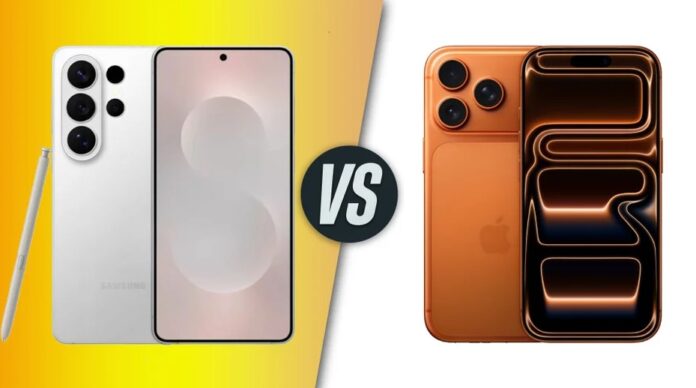
Galaxy S26 Ultra VS iPhone: What the Next Flagship Battle Really Looks Like
Galaxy S26 Ultra VS iPhone comparisons are once again dominating tech discussions as Samsung prepares its next Ultra flagship while Apple’s iPhone 17 Pro Max continues to set the pace for premium smartphones.
Every year, these two devices define what users expect from a flagship phone. In this upcoming matchup, both brands focus less on dramatic redesigns and more on refining what already works, performance, cameras, displays, and battery efficiency.
So, is this another close race, or is one brand quietly pulling ahead?
Galaxy S26 Ultra VS iPhone: Design and Build
Familiar polish meets bold adjustments
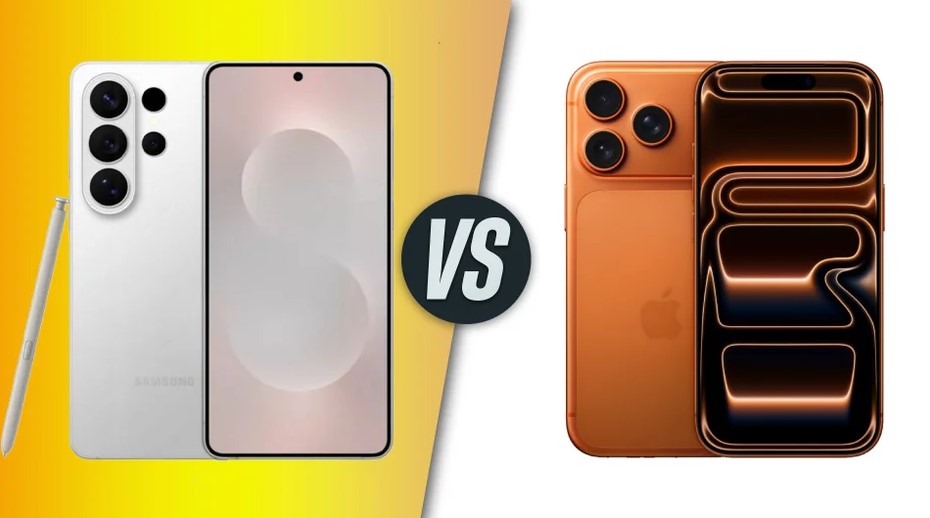
The Galaxy S26 Ultra VS iPhone design conversation highlights two very different strategies.
Samsung is expected to stick with the refined rounded-corner design introduced in recent Ultra models. This approach has been widely praised for comfort and ergonomics, especially compared to earlier sharp-edged designs.
Apple, on the other hand, keeps its flat-edge identity but introduces a more striking rear layout. The iPhone’s oversized camera plateau creates a bold, instantly recognizable look that clearly separates it from previous generations.

Materials and Durability Compared
Samsung may continue using titanium or its proprietary Armor Aluminum, depending on cost and thermal performance. The Galaxy S26 Ultra is expected to maintain IP68 water and dust resistance, offering dependable protection.
Apple has reportedly shifted from titanium to aluminum for the iPhone 17 Pro Max. The move improves heat dissipation while keeping the phone lightweight and durable.
Display Differences in Galaxy S26 Ultra VS iPhone
Brightness, clarity, and comfort
Displays remain one of the most important factors in the Galaxy S26 Ultra VS iPhone debate.
Samsung’s Galaxy S26 Ultra is expected to feature a 6.9-inch Dynamic AMOLED 2X display with peak brightness reaching 3,000 nits. A new OLED filter could improve visibility outdoors while also conserving battery life.
Samsung may also introduce an AI-based privacy feature that limits viewing angles automatically, enhancing on-the-go privacy.
The iPhone 17 Pro Max offers an equally large OLED display with improved brightness and multiple anti-reflective layers. While excellent, Samsung’s anti-glare technology could still hold a slight edge.
Security and Unlocking Methods
Samsung continues to rely on an ultrasonic in-display fingerprint scanner, which many users find fast and reliable.
Apple remains committed to Face ID, which integrates seamlessly across apps and services. Both methods are secure, and the choice largely comes down to user preference.
Performance: Galaxy S26 Ultra VS iPhone Power Test
Snapdragon vs Apple Silicon
Performance is a highlight in the Galaxy S26 Ultra VS iPhone comparison.
Samsung’s flagship is expected to run on the Snapdragon 8 Gen 5, built on a next-generation 3nm process. Early reports suggest noticeable gains in graphics performance, improved efficiency, and faster RAM speeds.
Apple’s iPhone 17 Pro Max is powered by the A19 Pro chip, also using advanced 3nm technology. Apple has added a vapor chamber cooling system, helping sustain performance during demanding tasks like gaming or video editing.
In real-world use, both phones are expected to feel exceptionally fast.
Software Experience Compared
Samsung’s Galaxy S26 Ultra will ship with the latest One UI version on Android, offering deep customization and improved long-term update support.
Apple’s iOS remains unmatched in ecosystem integration. Users invested in Apple products benefit from seamless connectivity across devices.
For official updates, visit the Samsung Newsroom and Apple Newsroom (DoFollow).
Camera Battle: Galaxy S26 Ultra VS iPhone
Hardware vs computational photography
Cameras remain a defining feature in the Galaxy S26 Ultra VS iPhone rivalry.
Samsung is expected to upgrade its 200MP main camera with a larger sensor, improving low-light performance, dynamic range, and natural background blur.
Apple focuses on smarter zoom. The upgraded 48MP telephoto camera enables near-optical zoom levels through sensor cropping, offering more flexibility for portraits and long-distance shots.
Ultimately, software processing will play a major role in how these cameras perform.
Battery Life: A Shifting Advantage
Battery capacity may be a weak spot for Samsung this year.
The Galaxy S26 Ultra is expected to retain a 5,000mAh battery, a figure unchanged for several generations. While efficiency improvements may help, competitors have moved ahead in raw capacity.
Apple’s iPhone 17 Pro Max features its largest battery ever, paired with iOS efficiency that delivers impressive real-world endurance.
For battery comparisons, resources like PhoneArena offer detailed benchmarks (DoFollow).
Charging Speeds and Convenience
Samsung is rumored to upgrade wired charging to 60W, a meaningful improvement. Wireless charging may also see gains with Qi2 magnetic support.
Apple has increased wired charging speeds to 40W and improved MagSafe wireless charging to 25W, narrowing the gap with Android rivals.
Storage and Memory Options
Both phones are expected to offer 12GB of RAM and storage options starting at 256GB.
Apple stands out by offering a 2TB storage tier, though at a premium price point.
Final Verdict: Which Phone Wins?
The Galaxy S26 Ultra VS iPhone matchup once again proves that there is no universal winner.
Samsung excels in display technology, customization, and camera hardware. Apple leads in battery efficiency, ecosystem integration, and long-term performance stability.
Your choice ultimately depends on whether you prefer Android flexibility or Apple’s tightly integrated ecosystem.
For more comparisons, check our internal guide on Latest Smartphone Comparisons.

