

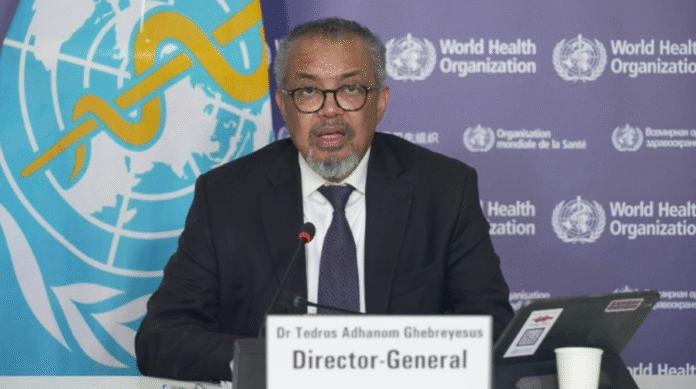
The Gaza health crisis famine has reached catastrophic levels, with the World Health Organization (WHO) warning that the Strip is facing a humanitarian and health disaster that could last for generations.
WHO Director-General Dr. Tedros Adhanom Ghebreyesus described the situation as a “fatal combination” of famine, injury, and disease during an interview with BBC Radio 4’s Today programme. He stressed that without a massive and sustained increase in humanitarian aid, the damage to Gaza’s population could become irreversible.
Although Israel has allowed more medical supplies and aid to enter Gaza following a ceasefire with Hamas, Dr. Tedros said the amount remains far below what’s needed to rebuild the shattered healthcare system.

Gaza Health Crisis Famine: A Catastrophe Beyond Words
The Gaza health crisis famine is the result of compounded disasters, severe malnutrition, overwhelming injuries, a broken healthcare system, and widespread outbreaks of disease caused by destroyed sanitation and water infrastructure.
Dr. Tedros explained, “When you combine famine with a mental health crisis and limited access to care, you create a generational catastrophe. The consequences will not disappear in a year or two, they will shape Gaza’s health for decades.”
According to WHO, hospitals are functioning at minimal capacity, lacking essential medicines, medical equipment, and electricity. Many doctors and nurses are working without pay, treating patients in tents and makeshift facilities.
Aid Efforts Fall Short of Urgent Needs
Despite a recent surge in aid, WHO and UN officials say it’s still not enough. The World Food Programme reported that over 6,700 tonnes of food entered Gaza since the ceasefire on October 10. However, the organization says at least 2,000 tonnes of food per day are required to prevent widespread starvation.
Dr. Tedros emphasized that 600 aid trucks should be entering Gaza daily to meet basic humanitarian needs, but the current average stands at just 200–300 trucks per day.
The Gaza health crisis famine has been worsened by restrictions on aid delivery. Dr. Tedros urged Israel to “de-link aid from political conditions” and not to “weaponize” humanitarian assistance.
“Aid should reach those who need it most without conditions,” he said. “We cannot negotiate the delivery of life-saving supplies.”
Ceasefire and the Struggle for Stability
The fragile ceasefire, brokered by the United States, aims to be the first phase of a broader 20-point peace plan designed to improve access to humanitarian aid. However, recent clashes have already tested its limits.
Israel temporarily suspended aid deliveries on Sunday after two Israeli soldiers were killed in an attack by Hamas fighters. The military responded with airstrikes that left dozens of Palestinians dead. International pressure quickly pushed Israel to resume the deliveries the next day.
Still, WHO fears that the Gaza health crisis famine will deepen unless both sides commit to protecting aid corridors and ensuring unimpeded humanitarian access.
A Broken Healthcare System on the Brink
Gaza’s healthcare infrastructure has nearly collapsed. Hospitals that once served thousands are now functioning without anesthesia, antibiotics, or blood supplies. Medical evacuations have halted, leaving critically ill patients stranded.
“At least 700 people have died waiting for medical evacuation,” said Dr. Tedros. “These are deaths that could have been prevented.”
He also revealed that critical equipment and supplies, such as tents for field hospitals, have been confiscated at Israeli checkpoints on claims of “dual-use” potential meaning they could be repurposed for military use.
“If you remove the tent pillars from aid convoys, how can we build hospitals?” he asked.
Human Cost of the Gaza Health Crisis Famine
According to Gaza’s health ministry, more than 68,000 Palestinians have been killed in Israeli attacks since October 2023, while thousands more remain missing or injured.
Many families now live among rubble, surviving on minimal rations and unsafe water. The psychological toll is immense. Mental health experts warn that generations of children are growing up with untreated trauma.
Dr. Tedros called the crisis “a test of global humanity,” adding, “We cannot allow an entire generation to be lost to hunger and despair.”

Global Reactions and Accountability
UN agencies, humanitarian organizations, and governments have echoed WHO’s call for immediate, unrestricted access to Gaza. The United Nations Office for the Coordination of Humanitarian Affairs (OCHA) said earlier this week that while aid efforts are helping to “turn the tide on starvation,” far more is needed to avert total collapse.
Even French President Emmanuel Macron and other world leaders have called for a coordinated global response, emphasizing that rebuilding Gaza will require at least $70 billion, with 10% of that earmarked for healthcare.
“The world has a moral responsibility to act now,” Dr. Tedros said, “because every hour of delay means more lives lost.”
Rebuilding Gaza’s Future: Peace as the Only Cure
The WHO chief closed his remarks with a somber reflection:
“We have always said that peace is the best medicine.”
The ceasefire has brought temporary relief, but violence has flared even after the agreement. Dr. Tedros described scenes of Gazans celebrating peace in the streets only for some of them to die days later from renewed attacks.
“Imagine being told the war is over, celebrating, and then dying days later,” he said. “That is the reality for too many people in Gaza today.”
Rebuilding Gaza’s health system will take decades and unprecedented global cooperation. But as Dr. Tedros insists, it starts with one essential step unimpeded access to aid.

